


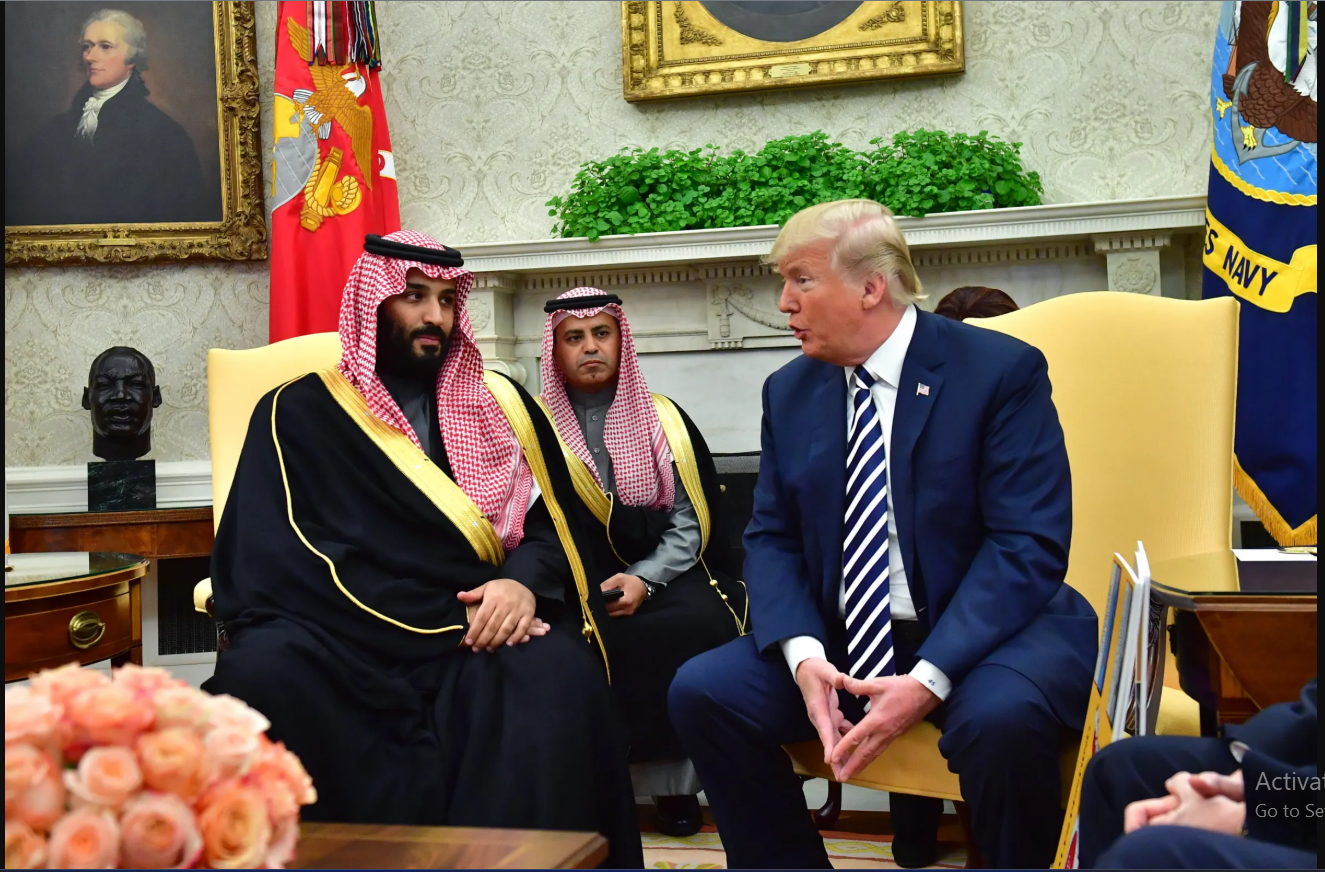
The United States and Saudi Arabia have announced a major civilian nuclear cooperation agreement aimed at expanding their strategic and commercial relationship while promoting nuclear safety and nonproliferation.
The administration of US President Donald Trump described the agreement as historic, saying it would allow American companies to provide nuclear technology, expertise and services to Saudi Arabia as the kingdom moves forward with plans to develop a civilian nuclear energy programme.
The US Department of Energy said the arrangement includes an agreement under Section 123 of the Atomic Energy Act of 1954, commonly known as a 123 agreement.
Such agreements establish the legal framework required for the United States to share civilian nuclear technology, materials and technical knowledge with another country.
The package also includes a separate bilateral safeguards agreement intended to ensure that nuclear materials and technology are used only for peaceful purposes.
US Energy Secretary Chris Wright said the agreements reflected a shared commitment to strengthening commercial ties between Washington and Riyadh.
He said the partnership was expected to create economic opportunities in the United States while supporting the security and energy goals of an important regional ally.
According to the Energy Department, American companies will be positioned to supply advanced nuclear technology and participate in a partnership expected to last for decades and involve investments worth billions of dollars.
The administration also said the agreement would generate employment in the United States by opening new markets for American nuclear companies, engineers, scientists and equipment manufacturers.
Officials argued that the deal would allow Saudi Arabia to develop nuclear power using US technology while maintaining strict safety and security requirements.
However, important questions remain over whether the kingdom will be permitted to enrich uranium domestically.
Some US media reports have suggested that the agreement may allow Saudi Arabia to produce its own nuclear fuel instead of relying entirely on imports from the United States or other suppliers.
The Department of Energy’s announcement did not clarify whether domestic uranium enrichment would be permitted.
Any provision allowing Saudi Arabia to enrich uranium is likely to attract close scrutiny and potential opposition in the US Congress.
Uranium enrichment is not prohibited under the Nuclear Non-Proliferation Treaty when conducted for peaceful purposes and under international monitoring.
The process increases the concentration of the uranium isotope needed for nuclear power generation.
However, uranium enriched to much higher levels can also be used in nuclear weapons, making domestic enrichment capability a particularly sensitive issue.
The Trump administration said the agreement would strengthen global nonproliferation standards rather than weaken them.
Officials maintained that the accompanying safeguards would ensure compliance with nuclear safety requirements and reduce the risk of peaceful technology being diverted for military purposes.
The deal will now be submitted to the US Congress for review, where lawmakers are expected to examine its security, strategic and nonproliferation implications.
The review process could become contentious because of Saudi Arabia’s regional influence, its security relationship with Washington and past debate over whether Riyadh should be allowed to control parts of the nuclear fuel cycle.
Saudi Arabia has long expressed interest in developing nuclear power as part of efforts to diversify its energy sector and reduce domestic dependence on oil and gas.
The kingdom hopes nuclear energy will help meet rising electricity demand, support industrial growth and contribute to long-term economic diversification.
For Washington, the agreement offers American companies an opportunity to compete for major nuclear contracts in a strategically important market.
It may also reduce the likelihood that Saudi Arabia turns to China, Russia or other suppliers for reactor technology and nuclear infrastructure.
The announcement comes during a period of heightened military and diplomatic tension across the Middle East.
The United States and Israel have been engaged in conflict with Iran, with Washington saying its actions are intended to stop Tehran from developing the capability to produce nuclear weapons.
Iran denies that it is seeking a nuclear bomb and says its nuclear programme is intended for peaceful civilian purposes.
The United States and Israel have previously attacked Iranian nuclear facilities, while Iran has responded during the continuing conflict with missile and drone strikes against locations hosting US forces and some energy facilities in Gulf countries.
The regional context is likely to intensify debate over the Saudi agreement.
Critics may question why Washington is expanding civilian nuclear cooperation with one regional power while using military force to restrict another country’s nuclear activities.
Supporters of the deal are expected to argue that Saudi Arabia is entering a transparent, regulated arrangement with the United States, including formal safeguards and congressional oversight.
Israel is widely believed to be the only country in the Middle East possessing nuclear weapons, although it has never formally confirmed or denied having such an arsenal.
The broader regional nuclear imbalance has long complicated efforts to develop a common approach to nonproliferation in the Middle East.
The Trump administration said the new partnership would deepen the strategic alliance between the United States and Saudi Arabia while demonstrating that civilian nuclear development can proceed under strong international controls.
Saudi Arabia is one of Washington’s most important partners in the Gulf and plays a major role in global energy markets, regional security and Arab diplomacy.
The nuclear agreement is expected to strengthen that relationship by creating long-term cooperation in energy, technology and investment.
Nevertheless, the final impact of the deal will depend heavily on the details eventually presented to Congress.
Lawmakers are likely to focus particularly on enrichment rights, inspections, the storage of nuclear materials and the mechanisms available to prevent technology from being redirected towards military use.
Until those details become public, the agreement will remain both a major commercial opportunity and a significant test of the Trump administration’s wider nuclear policy in the Middle East.
