


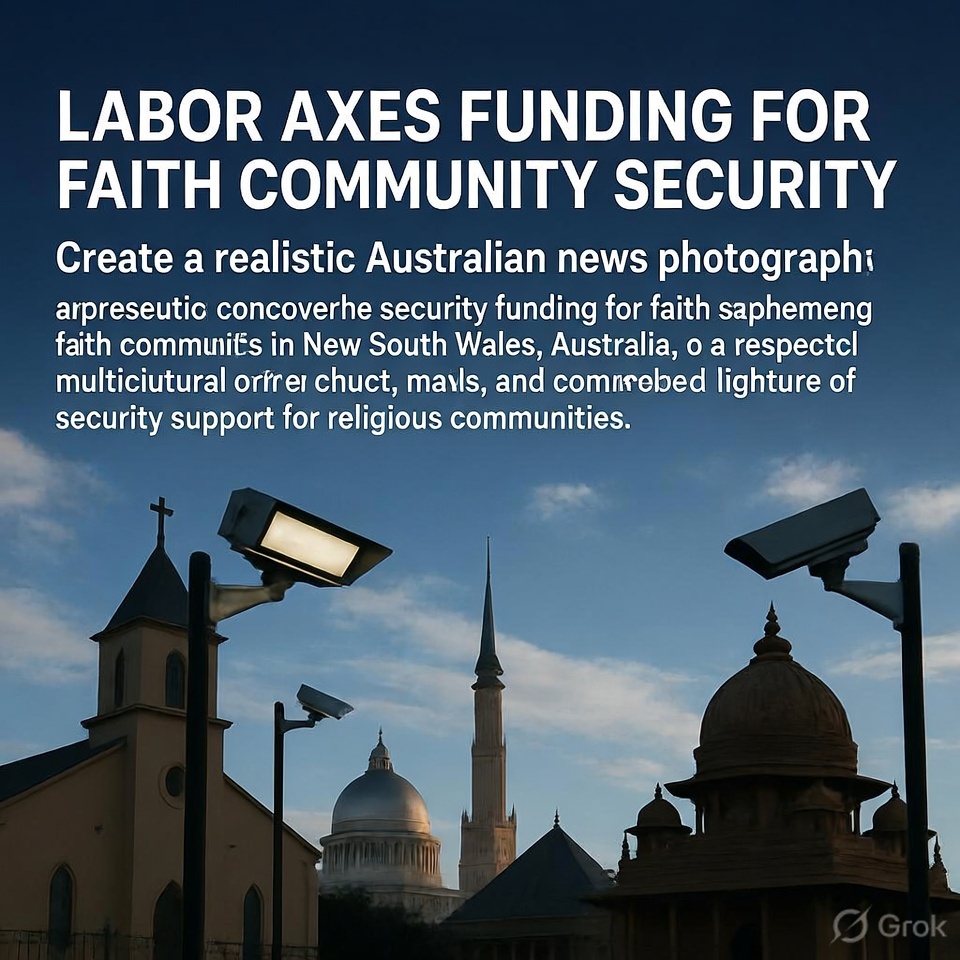
The NSW Government is facing criticism from the Opposition after no new funding was allocated in the 2026–27 state budget for a program designed to improve security at places of worship and faith-based community facilities.
The Safe Places for Faith Communities Program has provided financial support to churches, mosques, synagogues, temples and other religious organisations to strengthen security and reduce risks faced by faith communities across New South Wales.
The issue was raised during NSW Parliament’s Budget Estimates process, where Multiculturalism Minister Stephen Kamper came under scrutiny over the future of the program.
According to Opposition statements, the government confirmed that no additional funding had been included in the latest budget to continue the initiative beyond its existing funding cycle.
The program has funded practical security upgrades including CCTV systems, stronger doors and locks, improved lighting, fencing, alarms and controlled-access infrastructure designed to protect religious buildings and the people who use them.
The NSW Government previously committed $15 million over four years to the initiative.
The 2025–26 funding round, worth $5 million, was identified as the third and final round under that commitment. A total of 127 organisations received support in the latest round, while around 355 organisations have benefited from the program since 2023.
NSW Shadow Minister for Multiculturalism Mark Coure criticised the lack of new funding, arguing that concerns about community safety and social cohesion made continued support for faith-based organisations increasingly important.
Coure said religious communities across NSW have continued to face risks including threats, intimidation, vandalism and attacks, and argued that maintaining dedicated security assistance should remain a government priority.
He accused the Minns Labor Government of speaking about religious freedom and multicultural harmony while failing to provide new funding for a program specifically created to improve safety at places of worship.
According to Coure, withdrawing dedicated funding could leave faith organisations responsible for covering the cost of major security improvements themselves, despite many community organisations operating with limited financial resources.
The Opposition has argued that churches, mosques, synagogues, temples and other faith centres should not be forced to choose between funding community services and paying for increasingly sophisticated security measures.
The funding issue also comes amid broader concern about social tensions and community safety across NSW.
Faith leaders and multicultural organisations have repeatedly stressed the importance of ensuring people can attend religious services, community gatherings and cultural events without fear of intimidation or violence.
Earlier in the year, questions were raised during Budget Estimates about the future of the Safe Places for Faith Communities Program. At that stage, Kamper indicated the initiative was still active.
Subsequent government documents, however, described the 2025–26 funding allocation as the final round of the original $15 million commitment.
That has now increased political pressure on the NSW Government to explain whether a replacement program, alternative security funding or another form of support will be introduced for religious communities.
Supporters of the program argue that relatively targeted investment in security infrastructure can make a significant difference to community confidence, particularly at locations that may be vulnerable to hate-related incidents or targeted attacks.
Security measures such as CCTV, access controls, reinforced entry points and improved lighting can also help police and emergency services respond more effectively when incidents occur.
The Opposition is now calling on the government to clarify how it intends to support faith communities once the existing funding program concludes.
With concerns around religious vilification, community tension and public safety remaining prominent, the future of dedicated security funding for places of worship is likely to remain a significant issue in NSW politics.
