


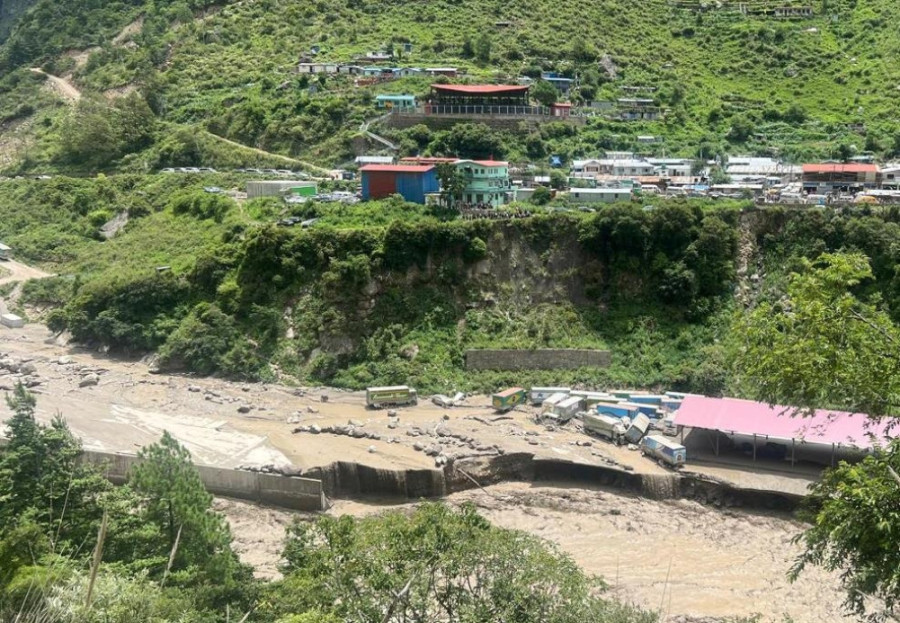
A sudden flash flood in Nepal’s northern Rasuwa district has caused widespread damage to settlements, markets and hydropower infrastructure after a powerful surge swept through areas along the Bhotekoshi River.
Studying Online Economics Courses
The flooding affected the border settlement of Timure and the town of Syabrubesi, prompting authorities to issue warnings for communities living downstream along the Trishuli River.
The Rasuwa District Administration Office said it received reports of an unexpected rise in the Bhotekoshi River, which flows into Nepal from Tibet. Officials warned that the increased water flow could raise river levels in the Trishuli and create further flood risks in downstream areas.
Authorities urged people working, fishing or travelling near the Trishuli River to move to safer locations immediately. Residents living along the riverbanks, as well as hydropower projects and other infrastructure operators, were advised to remain alert and take precautionary measures.
Sudden flood catches communities off guard
Rasuwa Chief District Officer Narendra Pariyar said officials were still assessing the extent of the destruction and had not yet determined the exact cause of the sudden flood.
“We received information that the flood arrived suddenly. We do not yet know the full scale of the damage, but reports indicate significant destruction,” Pariyar said.
He added that there had been no rainfall around the district headquarters when the flood occurred, raising questions about whether the event was linked to a glacier-related incident or another upstream disaster.
“There was no rainfall here. The weather was clear. The flood appeared suddenly, and we are trying to understand what happened upstream,” he said.
Local residents described the event as similar to a dam breaking, with a massive volume of water and debris rushing through the river valley.
Hydropower projects and infrastructure damaged
The flash flood caused major damage to several hydropower facilities in the region.
Residents reported that one hydropower project was washed away, while other projects, including the Chilime Hydropower Project, suffered damage.
Ajay Shrestha, a local resident, said the force of the flood appeared extremely powerful.
“It looked as though a dam had burst,” he said, warning that downstream communities could also face danger if water levels continued rising.
Officials said the exact source of the flood was still under investigation.
Downstream districts placed on high alert
Authorities in neighbouring districts have increased monitoring along the Trishuli River.
The Dhading District Administration deployed security personnel near the river and warned residents in parts of Nuwakot and Dhading to remain cautious due to the possibility of rising water levels.
Officials asked communities to immediately report any emergency situations to local authorities, emergency operation centres or nearby security forces.
A government team led by Finance Minister Swarnim Wagle, Finance Ministry Secretary Ghanshyam Upadhyaya and Customs Department Director General Yamlal Bhusal began coordinating rescue and emergency response operations with officials at the Timure Customs Office and other agencies.
Rescue helicopter unable to land in Timure
A rescue helicopter sent to assist people trapped by floods and landslides in Timure was forced to return without landing after floodwaters destroyed the local helipad.
Pilot Subash Khadka of Altitude Air said the helicopter could not find a safe landing area because the flood had severely damaged the settlement.
He said the village was barely visible from the air due to the scale of destruction.
“The river looked like it had suddenly broken free after being frozen. The entire Timure settlement was almost invisible,” Khadka said.
He warned that river levels downstream had risen rapidly and urged authorities to issue immediate safety alerts.
Previous disaster raises fresh concerns
The latest flooding occurred just over a year after another devastating flood struck the same region.
In July 2025, a flood originating from Tibet’s Lhende River entered the Bhotekoshi River system, killing at least nine people and leaving many others missing.
That disaster destroyed the Miteri Bridge connecting Nepal and China, damaged the Rasuwagadhi dry port and affected major road and hydropower infrastructure between Syabrubesi and Rasuwagadhi.
The repeated disasters have increased concerns about the vulnerability of Himalayan communities to sudden glacier-related floods, landslides and extreme weather events.
Authorities continue rescue operations and damage assessments while monitoring river conditions across affected areas.
