


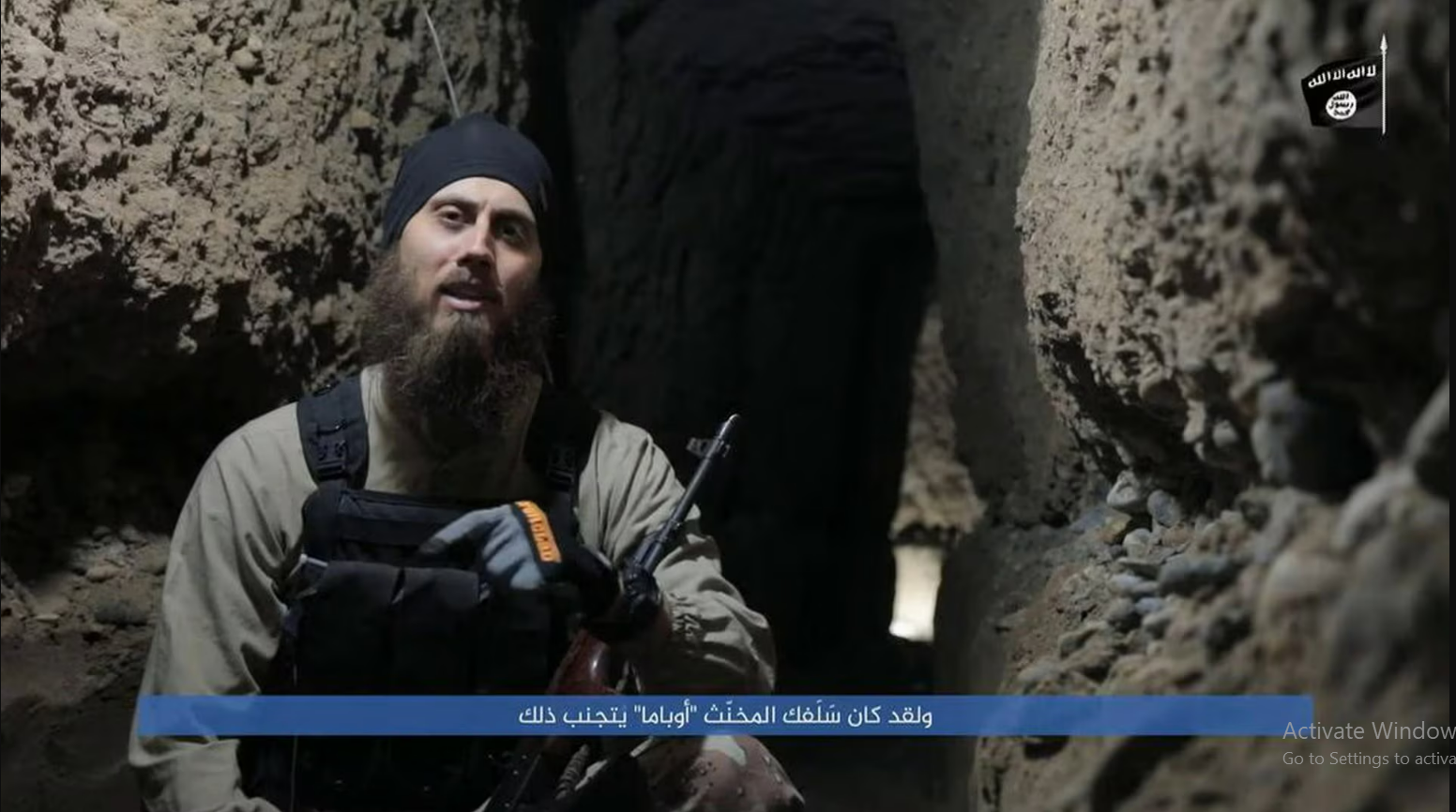
The Albanese government is facing growing pressure to explain when it first learned that Australian ISIS member Tareq Kamleh was still alive, after he had been presumed dead for almost a decade.
Treasurer Jim Chalmers declined to confirm whether the government or intelligence agencies had known about Kamleh’s survival for several years, despite reports suggesting Australian authorities were informed as early as 2022.
Kamleh, a Perth-born paediatrician who became known as “Dr Jihad”, travelled to the Middle East and joined the Islamic State group when it controlled large areas of Iraq and Syria.
He later appeared in propaganda material produced by the organisation and became one of Australia’s most notorious citizens to join the extremist group.
For years, Kamleh’s family and Australian authorities believed he had been killed during the battle for Raqqa in Syria in 2017.
However, recent reporting revealed that he is alive and being held in an Iraqi prison alongside 12 other Australian men who are seeking repatriation.
Further reports claimed Australian officials, including intelligence agencies and the Department of Foreign Affairs and Trade, had been informed about his status in 2022.
A source reportedly told officials about Kamleh’s survival that year and provided another briefing in 2025.
The source claimed DFAT chose not to become involved in the matter.
Chalmers, who sits on the federal government’s National Security Committee and has access to classified security briefings, was questioned about the reports during an interview with ABC Radio National.
He refused to confirm or deny whether the Albanese government had known Kamleh was alive.
Chalmers said the government would not provide assistance to Australians who had deliberately chosen to join a terrorist organisation.
He also warned that some members of the group could face the full force of Australian law if they returned to the country.
When directly asked whether the government knew of Kamleh’s survival, the treasurer said he only had access to details already reported publicly.
His response has intensified calls for senior ministers to clarify the timeline of what the government knew and what action, if any, was taken.
Opposition home affairs spokesman Jonathon Duniam said the public should have been informed if the government had received credible information that Kamleh remained alive.
Duniam described Kamleh as a serious security risk and argued that authorities should have prepared for the possibility of his return to Australia.
He said the government could have considered measures such as a temporary exclusion order, which may restrict a citizen’s ability to return immediately and allow authorities additional time to make security arrangements.
Kamleh remains an Australian citizen and would ordinarily have a legal right to return to the country.
However, any attempted return would likely trigger a major security, legal and political process.
Australian authorities could investigate whether there is sufficient evidence to charge him with terrorism-related offences, including membership of a terrorist organisation, providing support to ISIS or participating in propaganda activities.
Duniam said the opposition had serious concerns about allowing Kamleh to return and questioned whether the government had adequately prepared for such a scenario.
He accused Labor of potentially failing to act despite having years of advance notice.
The opposition senator called on Home Affairs Minister Tony Burke and Foreign Minister Penny Wong to publicly explain when they became aware of Kamleh’s survival and what steps their departments had taken.
The controversy raises difficult questions about how Australia should manage citizens who travelled overseas to join ISIS and are now being held in prisons or detention camps in Iraq and Syria.
Successive Australian governments have generally resisted providing consular assistance to people who voluntarily joined terrorist groups.
Ministers have repeatedly argued that such individuals must accept the consequences of their actions and that repatriation could create significant security risks.
At the same time, Australian citizens cannot automatically be prevented from returning permanently, particularly where they retain citizenship and are able to travel.
Temporary exclusion orders can delay a return and impose conditions, but they do not necessarily remove a citizen’s ultimate right to enter Australia.
Authorities would therefore need to balance national security concerns, criminal prosecution requirements and Australia’s legal obligations.
The question of evidence is also likely to be significant.
To prosecute an alleged foreign fighter, Australian investigators would need admissible evidence connecting the person to specific terrorist offences.
Material gathered from conflict zones can be difficult to verify, while intelligence information may not always be suitable for use in open court.
Kamleh’s known appearance in ISIS propaganda could form part of any investigation, but authorities would still need to establish the precise offences allegedly committed and whether they fall within Australian jurisdiction.
The revelation that he is being held in Iraq has also raised questions about whether Baghdad intends to prosecute him locally, continue detaining him or negotiate with Australia over his future.
No clear timetable has been announced for the possible return of Kamleh or the other Australian prisoners.
The government’s immediate position remains that it will not assist those who chose to join ISIS.
However, the latest reports have shifted attention away from the question of whether Kamleh should receive help and towards whether Australian authorities concealed or failed to act on information about his survival.
Labor now faces demands to explain whether intelligence agencies verified the reports, whether ministers were briefed and whether security agencies developed a plan for a possible repatriation attempt.
The issue is likely to remain politically sensitive because it combines national security, public transparency and the treatment of Australian citizens accused of supporting terrorism.
For the opposition, the central concern is whether the government had enough information to prepare for Kamleh’s possible return but failed to inform the public or take preventative action.
For the government, any detailed response may be limited by intelligence confidentiality and ongoing security considerations.
Until ministers provide a clearer account, questions will continue over when Australia learned that one of its most notorious alleged ISIS members was alive and what authorities did with that information.
