


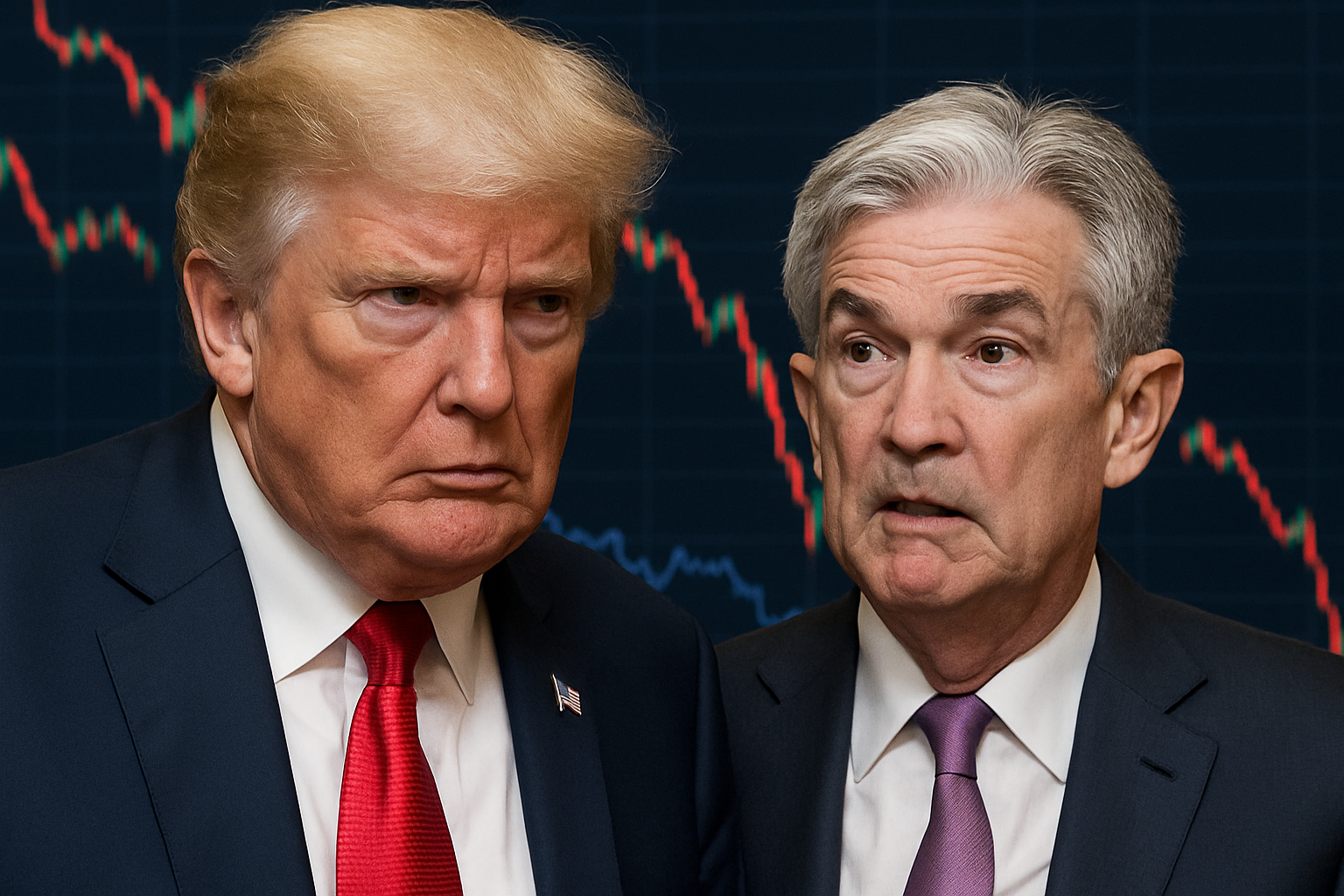
Once again, U.S. President Donald Trump demonstrated his ability to influence global financial markets—this time by revisiting a recurring theme: the potential dismissal of Federal Reserve Chair Jerome Powell.
Much like the disruption caused by Trump’s trade war comments in April, markets briefly plunged on Wednesday (July 16) following a White House official’s remark that the president was likely to soon remove Powell.
In response, equities, the U.S. dollar, and long-term Treasury bonds declined, while short-term Treasury yields rose amid speculation that any new appointee might align more closely with Trump’s push for lower interest rates. However, within an hour, the markets stabilized after Trump said he had no immediate plans to fire Powell, despite regularly criticizing him for not acting swiftly enough on monetary policy.
While the initial reaction was notable, it was somewhat subdued—largely due to Trump’s history of making provocative statements without follow-through, and doubts surrounding whether the president has the legal authority to dismiss a Fed chair over policy disagreements.
Still, the message from financial markets was clear: there is a growing concern that Trump could attempt to undermine the Federal Reserve’s long-standing independence by removing Powell, potentially igniting inflationary pressures.
Joe Gilbert, a portfolio manager at Integrity Asset Management, described the threat as “credible” and suggested it might be a strategic test to gauge market sentiment. He added that legal constraints would likely pose significant obstacles to Powell’s removal.
Others, such as Erik Nelson from Wells Fargo, believe that the market’s reaction could dissuade the administration from pursuing such a move, as it failed to deliver the desired economic boost.
Yields on two-year Treasury notes, which are highly responsive to Fed policy, fell by up to eight basis points, while 10-year yields trimmed a five-basis-point drop. Meanwhile, the Bloomberg Dollar Spot Index reversed a 0.2% gain to fall as much as 0.7%, and the S&P 500, which had risen earlier, dipped by 0.7%.
These abrupt market shifts largely reversed after Trump clarified that Powell’s dismissal was not imminent.
For some analysts, such as Bill Gross, former CIO of Pacific Investment Management, the timing of a potential leadership change is less critical than who might replace Powell. Gross argued that a Fed more aligned with Trump could lead to a steeper yield curve and a weaker dollar.
Many experts view even raising the issue as disruptive to market stability. JPMorgan Chase CEO Jamie Dimon emphasized during a recent earnings call that the Fed’s independence is “absolutely critical,” warning that political interference can lead to negative consequences.
Despite Trump’s assurances that “no, we are not planning on doing anything,” he left the door open by implying Powell could be fired over the rising cost of renovating the Fed’s headquarters. When asked if the renovation expenses could justify dismissal, Trump replied, “I think it sort of is.”
Kathy Jones, chief fixed income strategist at Charles Schwab, argued that merely threatening Powell’s job sets a dangerous precedent, indicating a willingness to break institutional norms to achieve policy objectives.
According to George Saravelos, global head of FX strategy at Deutsche Bank, if Trump were to remove Powell, it could trigger a sharp market response—potentially a 3–4% decline in the trade-weighted dollar and a 30–40 basis point sell-off in fixed-income markets within 24 hours.
Although investors currently seem to believe Powell will remain until his term expires next year, they are still considering various potential outcomes if Trump changes course.
Mizuho’s head of macro strategy, Jordan Rochester, noted that such scenarios could undermine market confidence, increase the likelihood of rate cuts, weaken the dollar, and raise long-term bond yields. Macquarie’s Thierry Wizman added that traders are now anticipating a steeper yield curve and that the Fed might shift its focus away from inflation toward more politically influenced goals.
For seasoned traders familiar with the volatility surrounding Trump-related headlines, Wednesday’s market turbulence was hardly unusual. Leah Traub of Lord Abbett summed it up succinctly: “You can go crazy if you try to trade around these headlines. We stood pat.”
