

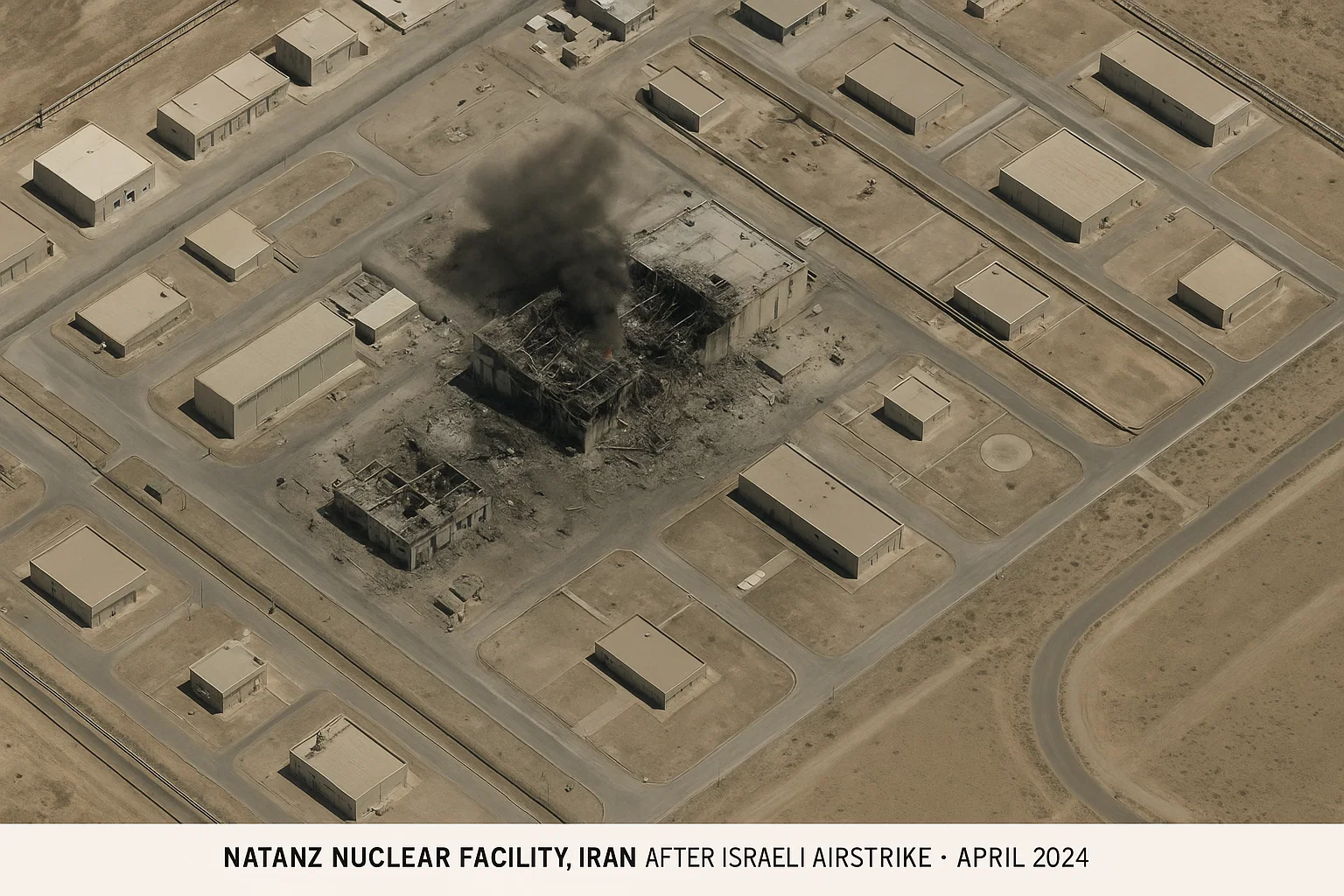
The latest escalation between Iran and Israel—moving beyond their usual shadow conflict into open confrontation—has exposed the fragility of Middle Eastern security frameworks and reignited concerns about a possible future marked by nuclear proliferation. This conflict is no longer limited to drones, proxies, and ballistic threats; it signals a deeper threat to the global non-proliferation system, particularly as it overlaps with growing global interest in nuclear energy, highlighted by the World Bank’s recent decision to lift its ban on funding nuclear power projects. While this shift signals a revival of nuclear energy for development, it also risks encouraging states to pursue nuclear capabilities for military purposes under the guise of energy development.
The crisis has intensified as Iran’s nuclear posture grows increasingly ambiguous, seen by many as a response to repeated Israeli threats of pre-emptive strikes on Iran’s nuclear facilities. Though Tehran insists its nuclear ambitions remain peaceful and maintains membership in the Nuclear Non-Proliferation Treaty (NPT), its expanding stockpile of enriched uranium and advanced centrifuges has rendered the “breakout time” concept nearly meaningless. As scholars Scott Sagan and Kenneth Waltz argue in The Spread of Nuclear Weapons: A Debate Renewed, proliferation often stems less from intent than from the temptation created by security anxieties. The Middle East today illustrates the classic security dilemma driving nuclear ambitions—an environment where the NPT weakens, not through legal breaches but through the erosion of its normative authority.
Israel, with its long-standing policy of nuclear ambiguity and its non-signatory status in the NPT, occupies a paradoxical position in the non-proliferation debate. As Avner Cohen describes in The Worst-Kept Secret, Israel’s deterrence strategy, centered around its Dimona nuclear facility, has long been protected by Western double standards. This ambiguity fuels regional rivals like Saudi Arabia, Turkey, and Egypt to consider pursuing their own nuclear capabilities. As Jacques Hymans explains in Achieving Nuclear Ambitions, when threats are perceived as sufficiently grave, even states with less institutional capacity may take risks to develop nuclear programs.
The World Bank’s renewed support for nuclear energy financing—framed as part of a global shift towards clean energy—coincides with an increasingly thin distinction between civilian and military nuclear programs. Charles D. Ferguson, in Nuclear Energy: What Everyone Needs to Know, highlights this dual-use dilemma as the core weakness of non-proliferation efforts, especially in unstable regions. While intended to promote sustainable energy, such financing may instead embolden states to pursue weaponization under the cover of civilian development.
The ideological aspect of nuclear programs is equally critical. David Patrikarakos, in Nuclear Iran: Birth of an Atomic State, argues that Iran’s nuclear ambitions are deeply intertwined with its revolutionary identity—nuclear capability is framed not just as deterrence but as a symbol of sovereignty and resistance to Western and Israeli pressure. This perspective further erodes the normative power of the NPT, as other states may similarly frame nuclear pursuits as justified defensive measures.
The weakening authority of international institutions exacerbates this erosion. Mohamed ElBaradei, in The Age of Deception, recounts the struggles of the International Atomic Energy Agency (IAEA) to maintain its credibility amidst political pressures. In the current Iran-Israel standoff, the IAEA’s inspections face increasing challenges, diminishing its ability to serve as a neutral enforcer of non-proliferation rules—a problem that undermines global non-proliferation efforts as a whole.
Compounding this is the geopolitics of nuclear patronage. Angela Stent’s Power and Purpose reminds us that nuclear diplomacy often serves broader strategic interests. As Western impartiality is increasingly questioned, rival power blocs may be more inclined to tolerate or encourage proliferation within their spheres of influence.
As The Nuclear Tipping Point documentary from the Nuclear Threat Initiative warns, when regional balances are disrupted enough, psychological and strategic barriers to proliferation collapse quickly. The deepening Israel-Iran conflict—rooted in religious, territorial, and ideological tensions—appears dangerously close to this tipping point. The rise of regional normalization agreements further isolates Iran and reinforces its sense of encirclement, driving its reliance on nuclear deterrence.
At a global level, emerging powers may see less reason to adhere to treaties created within a post-World War II liberal order. John Mearsheimer’s The Tragedy of Great Power Politics argues that in an international system driven by power maximization, norms often give way to raw strategic interests. This growing realist approach makes disarmament efforts increasingly hollow and dangerous, as survival instincts override abstract ideals of non-proliferation.
Looking ahead, the world may face an accelerating expansion of nuclear-capable states, not gradually but exponentially. As Richard Rhodes warns in Arsenals of Folly, the very existence of nuclear weapons creates ongoing systemic instability—not necessarily from their use, but from the constant crises they provoke. With the World Bank legitimizing nuclear energy financing and the NPT facing both ideological and practical challenges, the world may be entering a second nuclear age—more decentralized, unstable, and perilous.
The Israel-Iran conflict has not only destabilized regional security but also shaken the global nuclear framework. Unless the non-proliferation regime addresses both its enforcement double standards and shifting global narratives that now treat nuclear capability as legitimate security insurance, the world may soon witness a significant—and dangerous—surge in nuclear proliferation.
